
What arbitr is
arbitr is the trust layer between AI and everything a company publishes.
It connects to the systems a customer already runs. Every change, whether a person made it or a model did, is checked against rules that customer approved before it goes live. Most changes pass automatically. The ones that don’t get flagged to a human.
Approval stops being a bottleneck and becomes an exception.
Put plainly: AI produces the words. arbitr makes them safe to publish.
How we’re building it
Four layers, built in sequence, each one making the next more valuable.
Models we own
Most of the market rents intelligence from someone else. We build ours: small specialist models of 3 to 7 billion parameters, against frontier models in the hundreds of billions. A fraction of the size, better at the one job they’re built for: ours ranks first on unseen English–Japanese against models many times larger. Customers can upload their own data and initiate their own model, built on IBM infrastructure and deployed inside arbitr for them to use in any workflow they choose.
Agents that do the work
An agent is a specialist that performs one job end to end. Customers browse a marketplace and deploy one in minutes: fifteen live across seven categories today, averaging 2.8 per customer. That last number is the one we watch, because it rises without a new sales cycle. Agent Studio lets customers build the specialist only they need, which means our capability grows without our headcount growing.
7Categories
2.8Avg per customer
Cortex, the layer that compounds
This is the part that is hard to explain and impossible to copy. Approved sources go in. Claims and terminology are extracted. A human verifies them once. From then on, that decision is permanent memory, and every agent draws on it.
Every correction a customer makes, they only make once.
Two consequences. The output gets more accurate the longer they use it, which means less human review, which means our cost of delivery falls as usage rises. And the asset is theirs and only works here: a competitor can rent the same model this afternoon, but it cannot rent four years of a customer’s verified corrections.
A revenue model built for AI
Customers buy a platform subscription plus two kinds of credit: intelligence credits for AI work, and trust credits for human verification. They buy credits, not raw computing power. The more a customer uses arbitr, the more efficient it becomes, every verified correction is remembered, so less human review is needed over time and our cost of delivery falls as usage rises.
We are long AI progress, not short it.
Product overview
Model layer
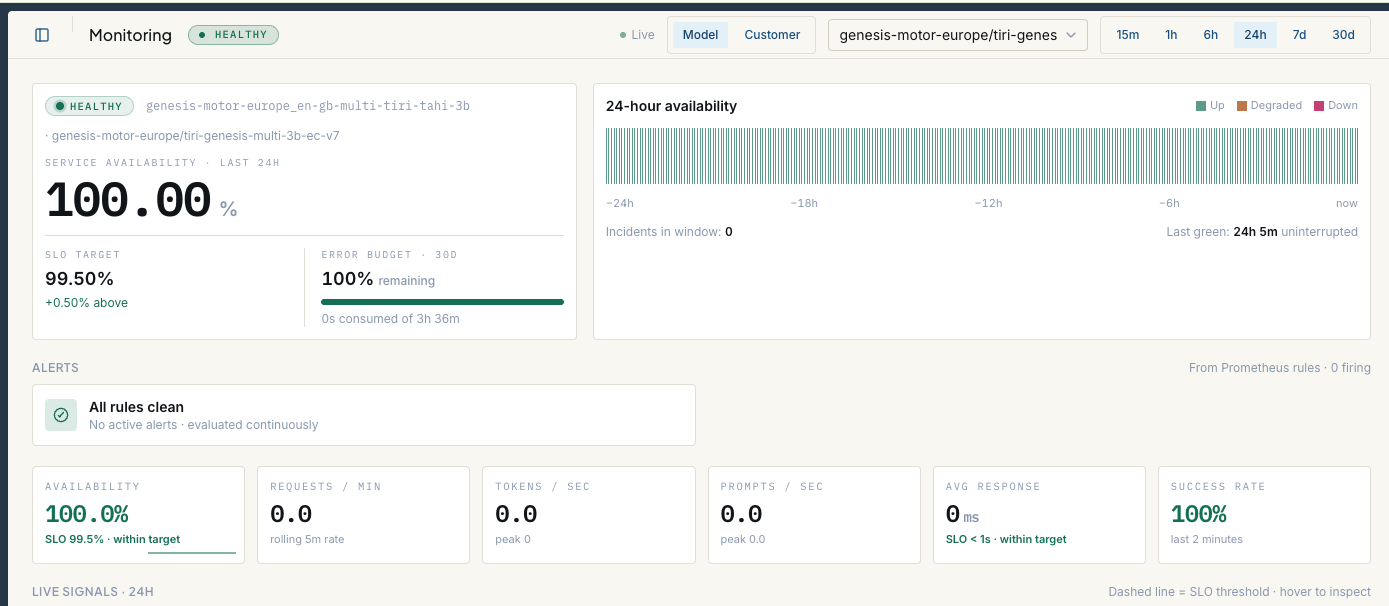
The model layer is where a customer chooses the intelligence doing the work. Our own specialist models sit alongside the frontier models, and customer-specific small language models built on IBM infrastructure, deployed inside arbitr, available to any workflow they run.
Building agents
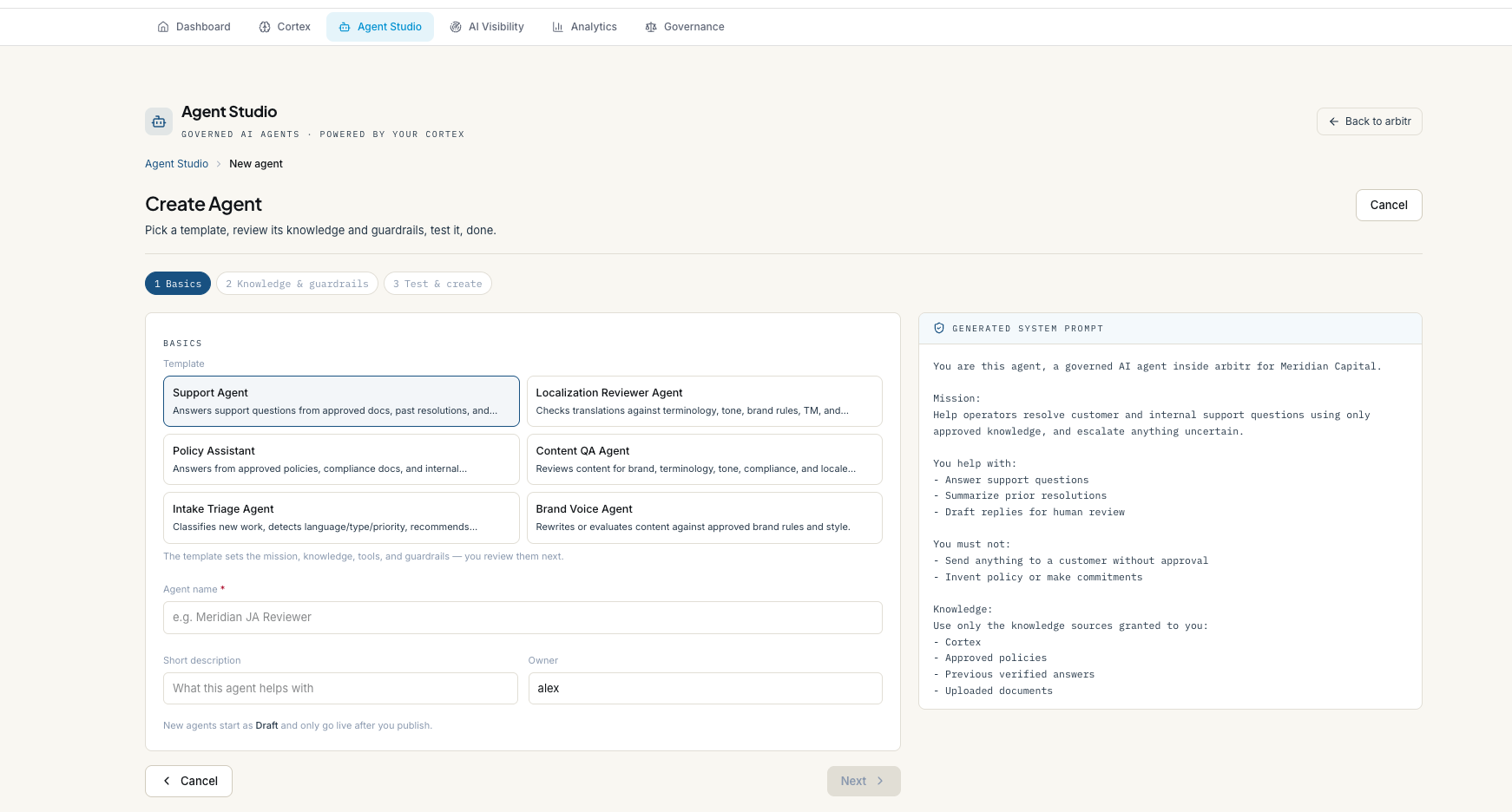
An agent is a specialist that performs one job end to end. Agent Studio is where a customer assembles one: pick the model, set the rules it has to follow, define what it hands back and who reviews it.
This is how customers get the specialist they only need, without waiting on our roadmap. Our capability grows without our headcount growing.
Agent marketplace
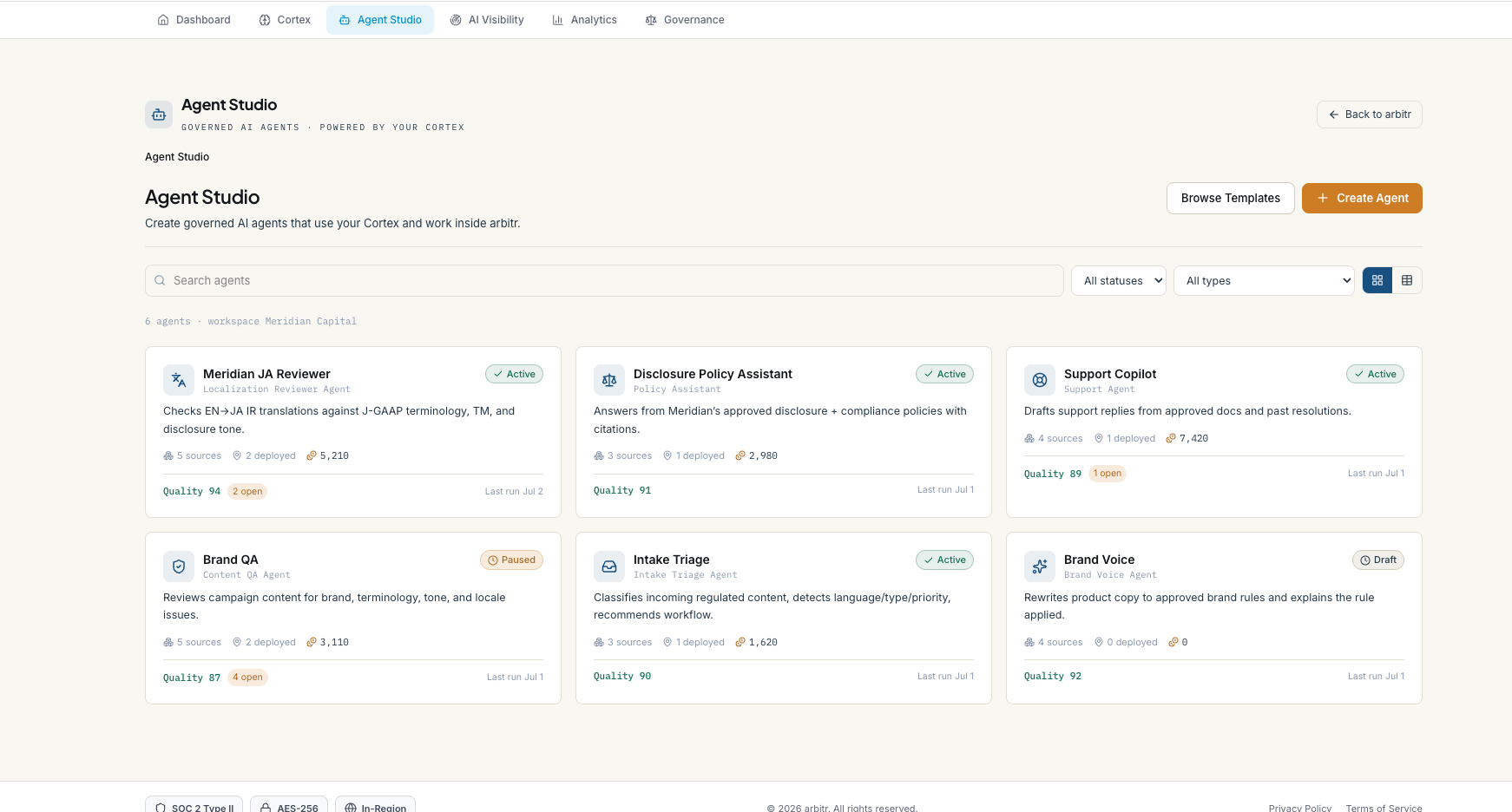
Most customers don’t start by building. They browse. The marketplace lists every agent available to them with what it does, what it costs to run and what it has been verified against. Multiple agents live today and more going live soon.
Customers average 2.8 agents each. That number is the one we watch, because it rises without a new sales cycle.
Deploying agents
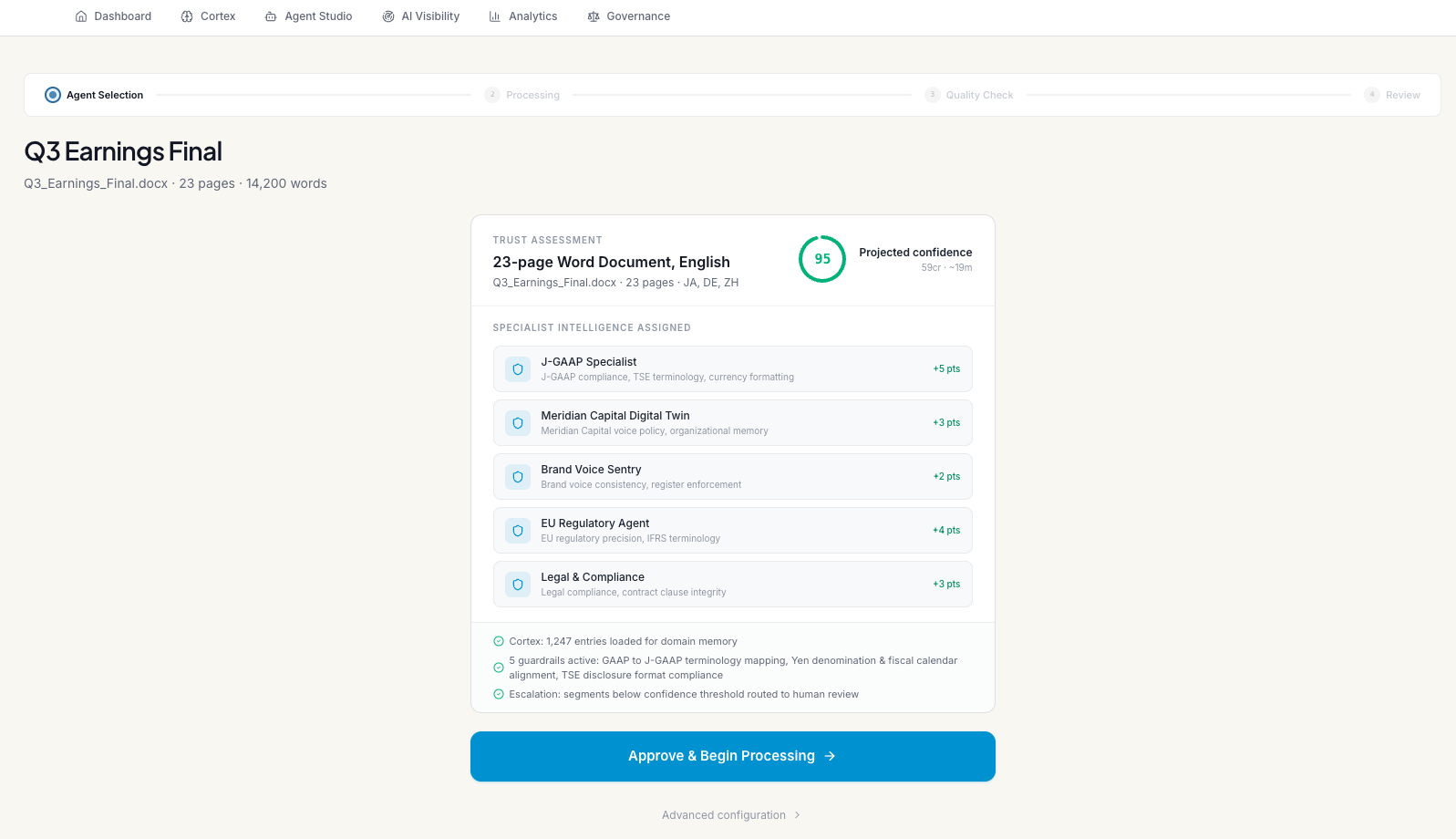
arbitr learns and knows which agents to deploy. It knows the work and deploys one, two, or an entire orchestration of agents to ensure the output is verified and trustworthy.
From that point on, every output the agent produces carries its trail: the source it used, the rules it was checked against and the reviewer who verified it. Every detail is auditable and defensible.
Cortex
Every company has things it knows. The right way to describe a product. Words the legal team never allows. A price that must always look a certain way. The lesson learned when a campaign went wrong in March.
Today, that knowledge lives in people’s heads, old emails, and scattered documents. When someone leaves, or when AI writes content fast, that knowledge gets missed, and mistakes reach customers.
Cortex is where arbitr keeps everything a customer’s company has approved. Not everything it has ever seen: only what a real person said yes to. Then arbitr uses that memory every time it writes or checks content, so the work follows the company’s rules automatically.
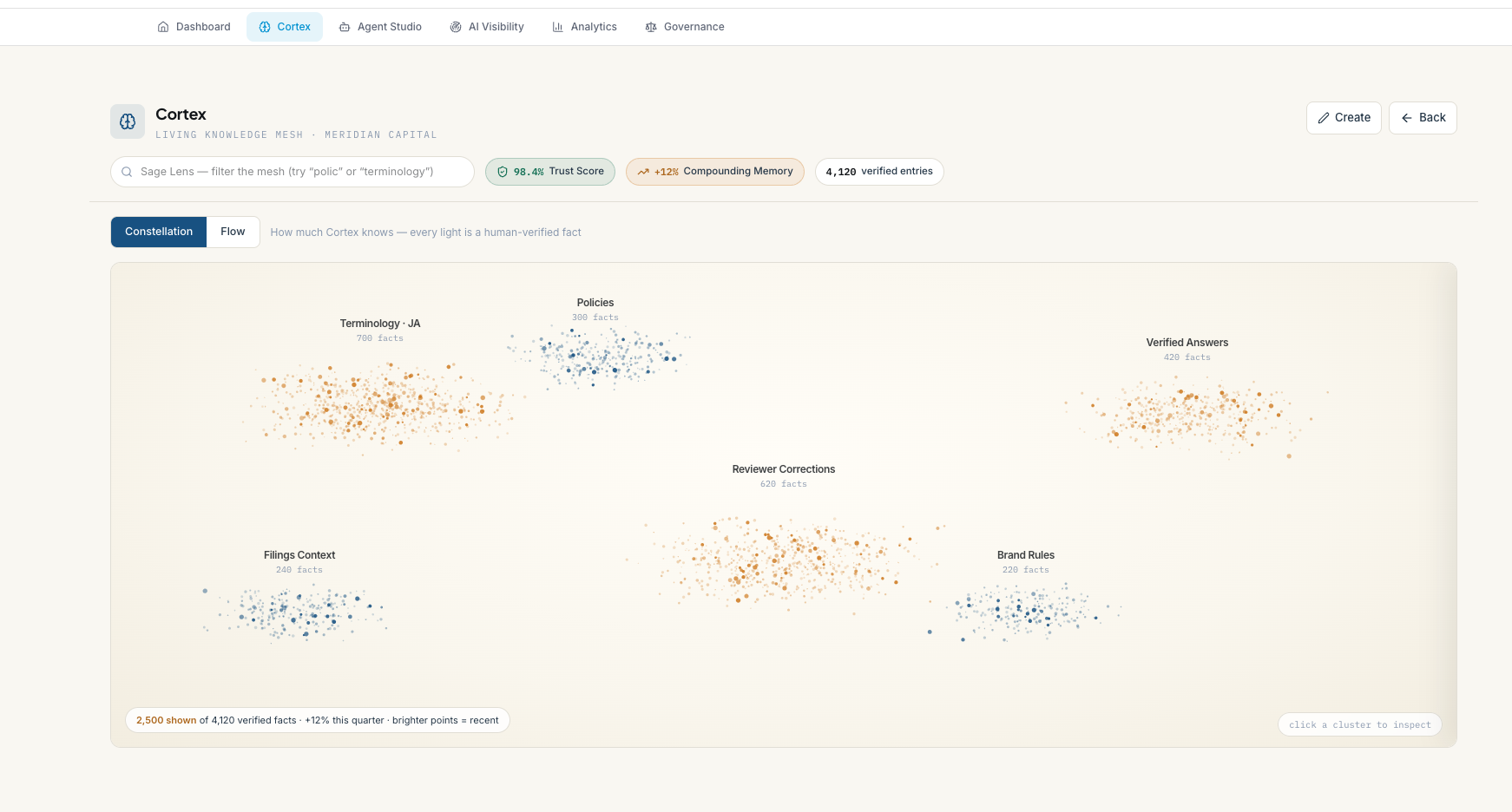
Most AI tools know the internet. None of them know the customer’s company. Cortex means every review teaches arbitr something, so month six is better than month one, mistakes stop repeating, and the customer’s knowledge stops walking out the door when people leave. And because it only remembers what humans approved, it is safe to use where mistakes are expensive.
Pricing model
arbitr represents a new pricing model for our customers. Instead of pricing based on individual projects, we are following the emerging AI pricing model: a monthly or annual fee to access the platform, then usage-based pricing for the agents, models and other solutions customers access inside arbitr. This AI-first revenue positions the business for growth and never leaves our customer waiting.
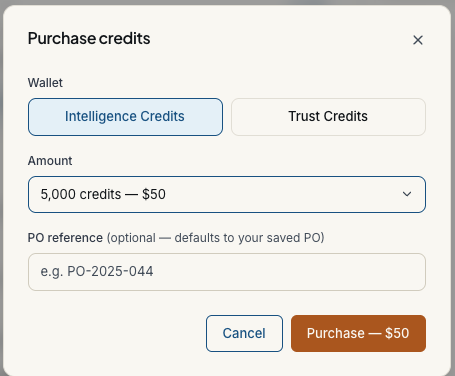
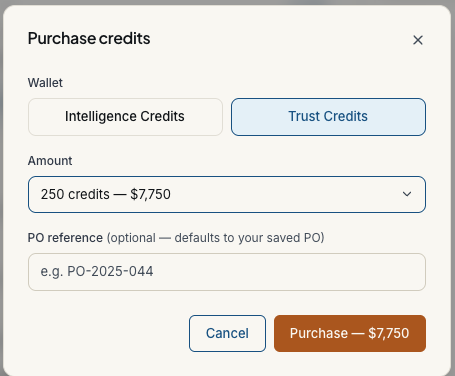
A two credit system, built on the arbitr foundation, Intelligence and Trust.
Intelligence Credits
Intelligence credits fuel the automation: the drafting and rapid processing that only a model can do.
Trust Credits
Trust credits activate the accountability layer, engaging our network of 37,000 specialists to verify and refine the final result.
These exist as distinct resources, allowing customers to calibrate the balance between velocity and certainty. They can prioritise Intelligence for high-volume needs, reserving Trust for the high-stakes work where errors carry a heavy price. We don’t mandate human intervention; we let the customer decide where it adds value.
What’s next
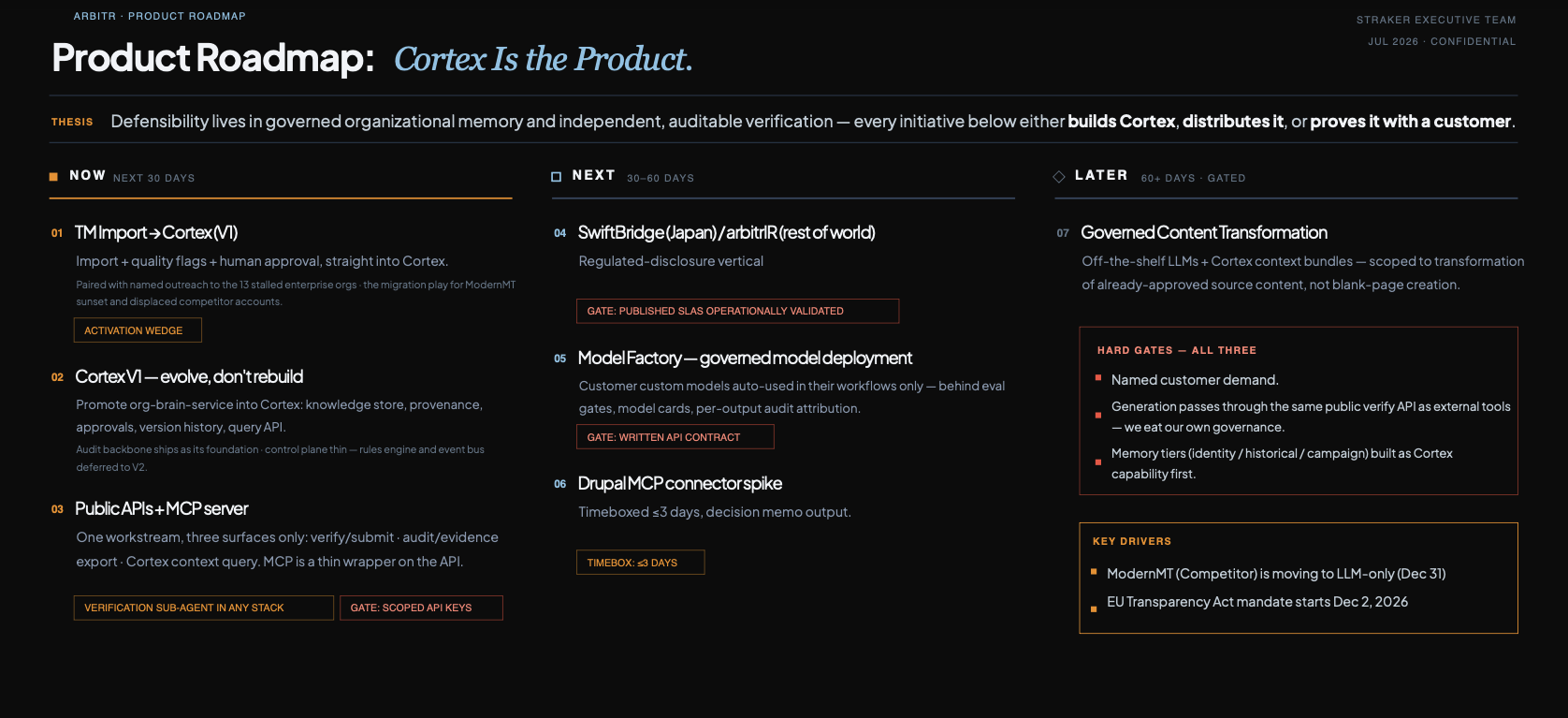
Next month we move from initial customer onboarding to broadening the products and services customers can access inside arbitr. A sneak peek of a few of the features getting released:
Nake Sekander
President, Product and GTM